
Blogs 09 2018 - 04 2019
In the second of her posts on the famous 'Ghent Altarpiece', Laura considers the imagery which reflects the Mass and elements of the lay devotional experience
The Ghent Altarpiece is made up of twenty-four panels. It is the largest and most complex (known and surviving) set of panel paintings made in the fifteenth-century Netherlands. No other painting by Jan van Eyck is known for certain to have been made for public display in a church. The visual programme of the altarpiece may have been devised by a theological adviser, perhaps the prior of St John’s, Olivier de Langhe, who was the author of a learned treatise on the Eucharist.
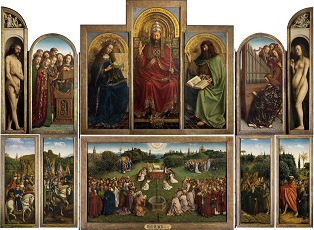
When the altarpiece is opened up, its upper register shows a deisis, a Byzantine artistic convention: Christ, the Virgin Mary and St John the Baptist are seen enthroned in heaven, flanked by singers and musicians. Adam and Eve stand at the outer edges, below two scenes from the lives of their sons, Cain and Abel. Below, we see a mystical vision of the Adoration of the Lamb of God (Agnus Dei). It is set in an unparalleled landscape depiction of the heavenly gardens of Paradise. The towers and spires of the New Jerusalem behind them are real and recognisable buildings: the tower of Utrecht Cathedral and the tower of St Nicholas’s Church in Ghent can be seen, for example.
The lamb stands on an altar flanked by winged angels. The angels hold various instruments of the Passion or swing censers before the altar, just as a priest would do in the chapel itself when the Mass was being celebrated. Blood pours from the lamb’s breast into a golden chalice, set on the altar beside him. The vision of an altar, a chalice containing the blood of Christ and angels swinging censers all vividly recalls the service of the Mass. It’s worth remembering that in medieval times, the laity took communion in one kind only, taking the bread (the body of Christ) but not the wine (the blood of Christ). The blood of Christ was consumed by the eyes alone- and in the Ghent Altarpiece, there is a splendid banquet for the eyes to feast on.
‘And he showed me a river of water of life, clear as crystal, proceeding from the throne of God and the Lamb’, Revelation 22:1
The Fountain of Life (Revelation 22:1, ‘And he showed me a river of water of life, clear as crystal, proceeding from the throne of God and the Lamb’), another symbol of the Eucharist, has been placed in the foreground. Water sprays from it from six spigots, symbolising the other six sacraments of the Church. All these elements of the panel particularly emphasise the redemptive and healing powers of the Eucharist, able to absolve all sins and guarantee your entry to the Paradise we see in the altarpiece. In the Middle Ages, ordinary lay people usually received communion only once a year, at Easter. They might attend daily Masses (and in fact, this was very normal- a staple of parish social and business life), but only to watch and pray. The sight of the Mass, a sight amplified in the Ghent Altarpiece in a way that carefully communicates its theological meaning and power, was key to lay devotional experience of the Eucharist. The Eucharistic themes of the altarpiece are especially appropriate for a chapel intended to save the souls of Joos Vijd and his wife through daily celebration of the Mass.
Several groups of figures converge on the sacred altar: Old Testament patriarchs, prophets and pagan philosophers; apostles, popes and bishops; holy martyrs and confessors, hermits and pilgrims, knights and just judges. Lots of these figures can be identified by their attributes: Virgil holding a laurel wreath, St Barbara with the tower she was locked up in by her father.
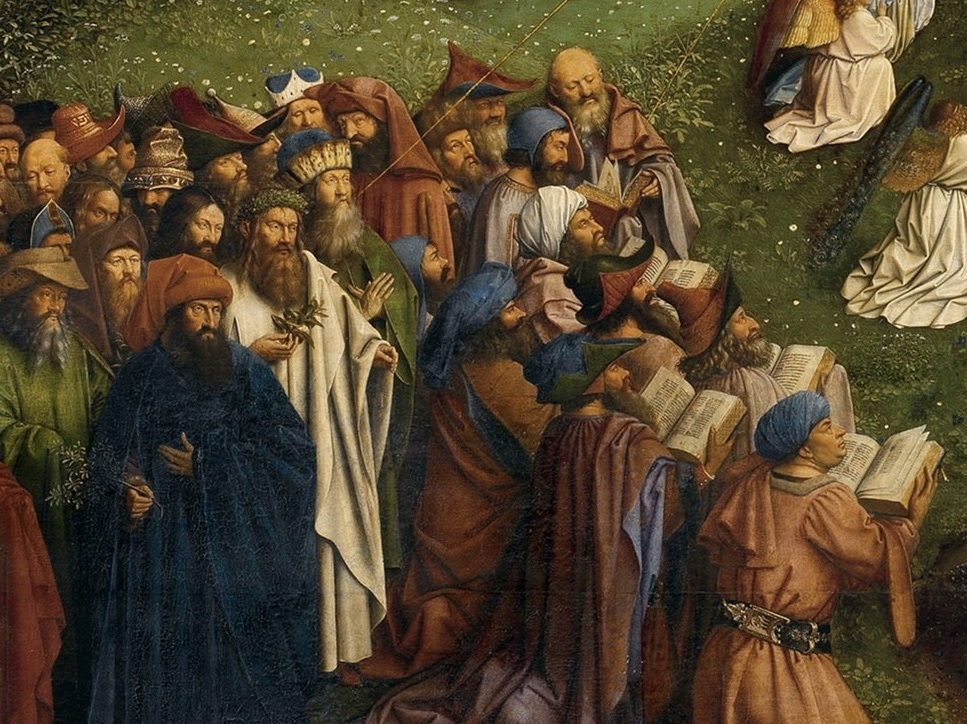
As you can see, lots of the heavenly ‘congregation’ are holding thick service books, as if they are also participating, like the angels, in the service of the Mass. When the Mass was celebrated each day in the chapel itself in Ghent, it would have been as if the clergy and any worshippers were ‘joining in’ with the eternal, heavenly Mass depicted in the lower register of the altarpiece.
You can even glimpse musical notation found on the pages of the service books. The sight of the Mass is important- but so is its sound…
Find out more about the role of music in the Ghent altarpiece in Laura's next post.
Laura stopped off in Ghent on her way to the recent 'Transnationalism at Court' event in Liège, and it was an ideal opportunity for some project-related sightseeing. In this series of blog posts, Laura considers the famous 'Ghent altarpiece', from Flemish artist Jan van Eyck.
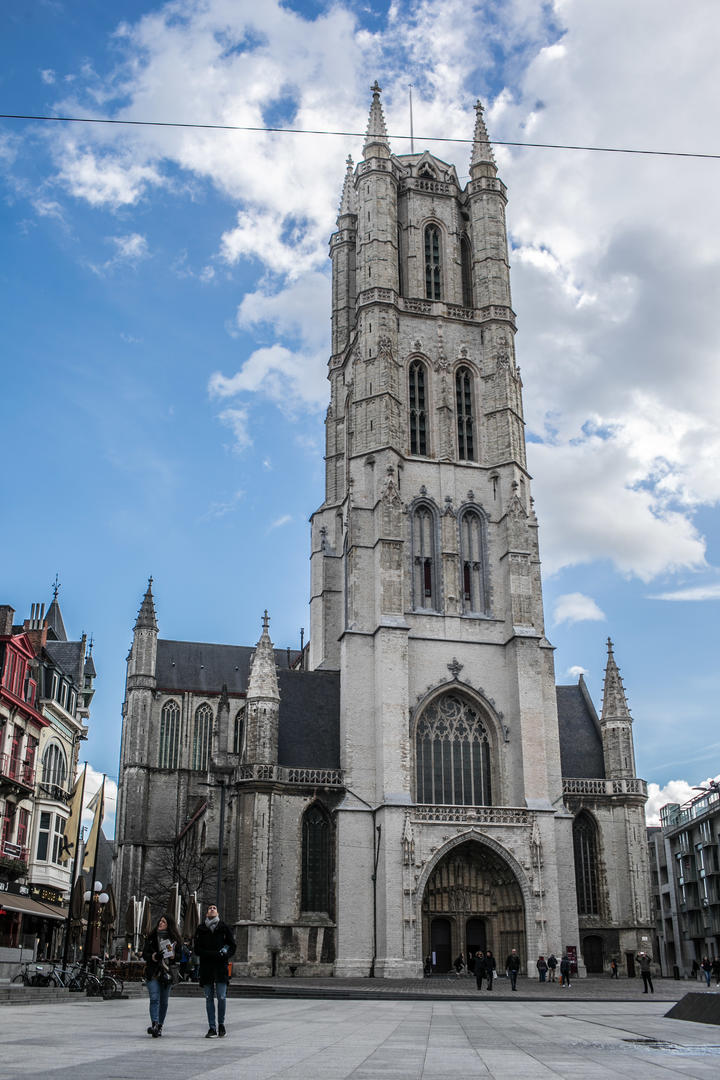
St Bavo's Cathedral ©Stad Gent - Dienst Toerisme
The recent MALMECC workshop in Liège provided an opportunity for me to follow in the footsteps of Philippa of Hainault: by visiting Ghent, where on 6th March 1340, Philippa gave birth to her third son, John of Gaunt, later duke of Lancaster and father of Henry IV of England. ‘Gaunt’ is a Middle English corruption of Ghent.
I think it’s possible that Philippa named her son after the patron saint of the city of Ghent, St John the Baptist. The city’s oldest parish church was dedicated to St John the Baptist. Rededicated around 1540, today it is better known as St Bavo’s Cathedral.
St Bavo’s is the home of one of the most important works of art in late medieval Europe, the 11ft by 15ft Ghent Altarpiece (c.1432).
Albrecht Durer visited it on a journey to the Netherlands in 1521, writing in his diary that it was: ‘a most precious painting, full of thought’ (‘ein über kostlich hoch verständig gemähl’). Originally commissioned sometime before 1426 by a wealthy member of the urban patriciate in Ghent, Joos Vijd, from local artist Hubert van Eyck, the work was completed in 1432 by his more famous brother, the renowned Flemish artist Jan van Eyck. The work was made for the chapel personally founded by Joos Vijd in 1435 to celebrate a daily Mass for the soul of himself and his wife, Elisabeth Borluut. They are depicted on the sides of the altarpiece when it is closed, below an image of the Annunciation to the Virgin and grisaille (grey) images of St John the Baptist and St John the Evangelist. At the very top of the closed panels are sibyls and prophets.
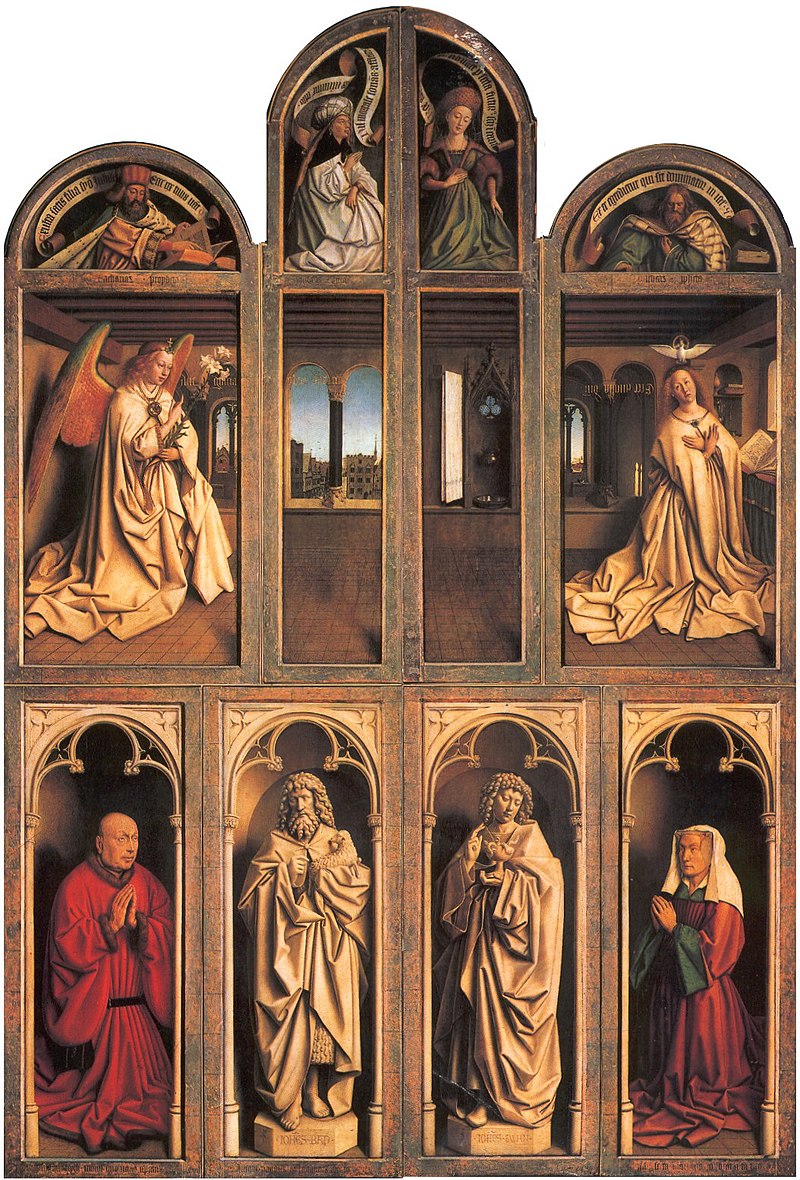
Joos Vijd (bottom L) and his wife Elisabeth Borluut ( bottom R)
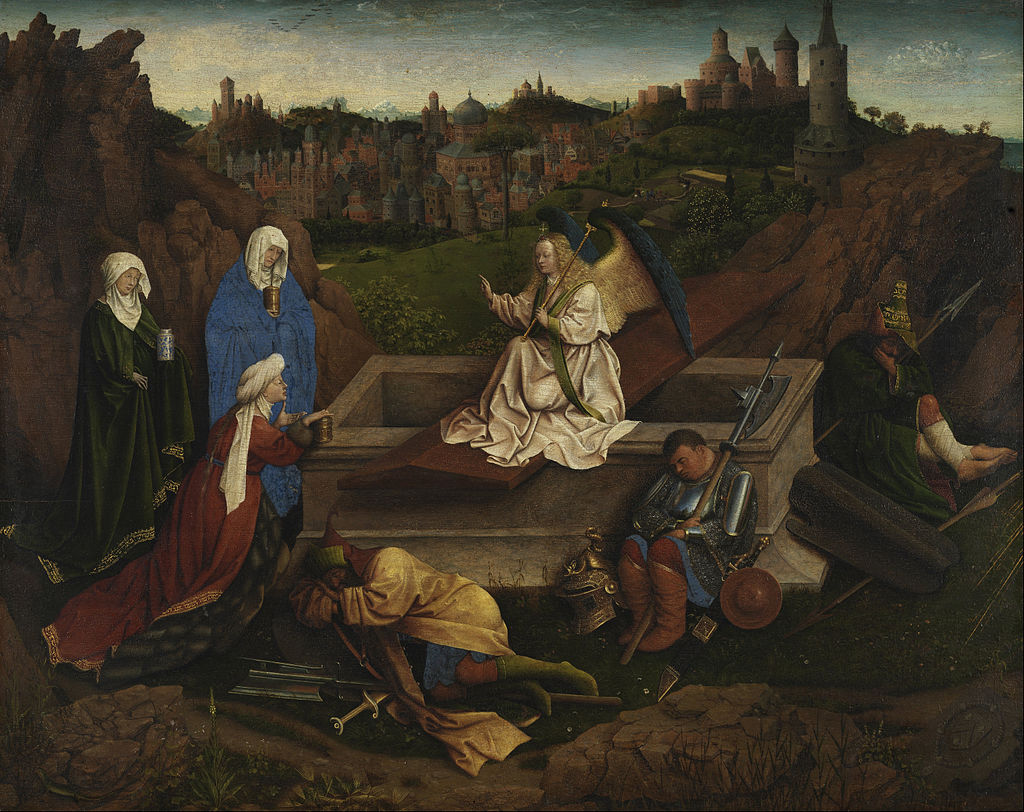
Both patron and painter had strong connections to the courts of the Low Countries. Joos Vijd was from a minor noble family. Jan van Eyck worked for both John of Bavaria, count of Holland and Philip the Good, duke of Burgundy. In fact, he became a trusted courtier as well as court painter for Philip the Good, attaining the title of ‘varlet de chambre’. In 1426, Jan van Eyck travelled on pilgrimage to Jerusalem on behalf of the duke. His first-hand knowledge of the city accounts for the accurate depiction of the skyline of Jerusalem in a painting sometimes attributed to Jan, his workshop, or his brother Hubert. This is the c. 1410-1426 Three Marys at the Tomb. Notice the circular form of the Dome of the Rock in the centre of the painting: a building which still dominates the Jerusalem skyline, especially if you’re looking across at the Old City from the Mount of Olives
The Three Marys at the Tomb, attributed to Hubert can Eyck, c.1410-20. Museum Boijmans Van Beuningen
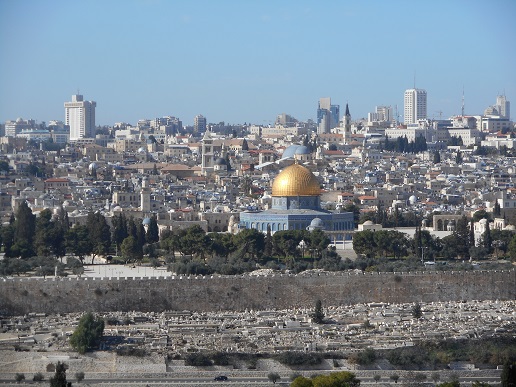
Dome of the rock
Jan made a ‘secret and far trip’ on Philip’s behalf at the same time, perhaps visiting cities in the Ottoman Empire. In 1428, he visited England and Spain on his way to Portugal, to help negotiate Philip’s third marriage to the Infanta Isabella of Portugal. Jan van Eyck painted two portraits of the princess to send back to Burgundy, and was again able to go on pilgrimage, this time to Santiago de Compostela.
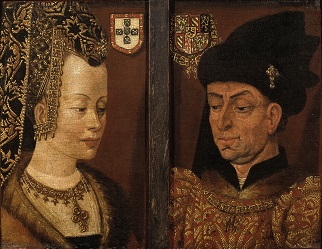
Unidentified artist, Philip the Good and Isabella of Portugal
But amongst all these courtly travels and delicate diplomatic missions, Jan van Eyck found the time to complete the Ghent Altarpiece by 1432…
Thanks for reading - we'll have more of Laura's thoughts on the altarpiece next week!
References:
Craig Harbison, Jan van Eyck: The Play of Realism (London, 1991)
Elizabeth Dhanens, Van Eyck: The Ghent Altarpiece (London, 1973)
Barbara Haggh, ‘The Mystic Lamb and the Golden Fleece: Impressions of the Ghent Altarpiece on Burgundian Music and Culture’, Revue belge de Musicologie / Belgisch Tijdschrift voor Muziekwetenschap 61 (2007): 5-59.
Researcher Christophe Masson reflects on the latest MALMECC study day, an academic tour of Europe in search of the cultural influences of papal Avignon...
Papal Avignon lay at the centre of the third MALMECC study day (8th February 2019). As the papacy was possibly the Western European power most eager to assert its world sovereignty, Avignon, where the pope resided from 1309 to 1376 (and even to 1403 if we consider period of the Great Western Schism), was something of a centre of the world. It is no surprise, then, that some of the greatest minds of the Middle Ages lived and worked there, (Petrarch being just one example). Nevertheless, the objective of the study day was to go further than a catalogue of great names and to look into the role Avignon played in the diffusion of culture.
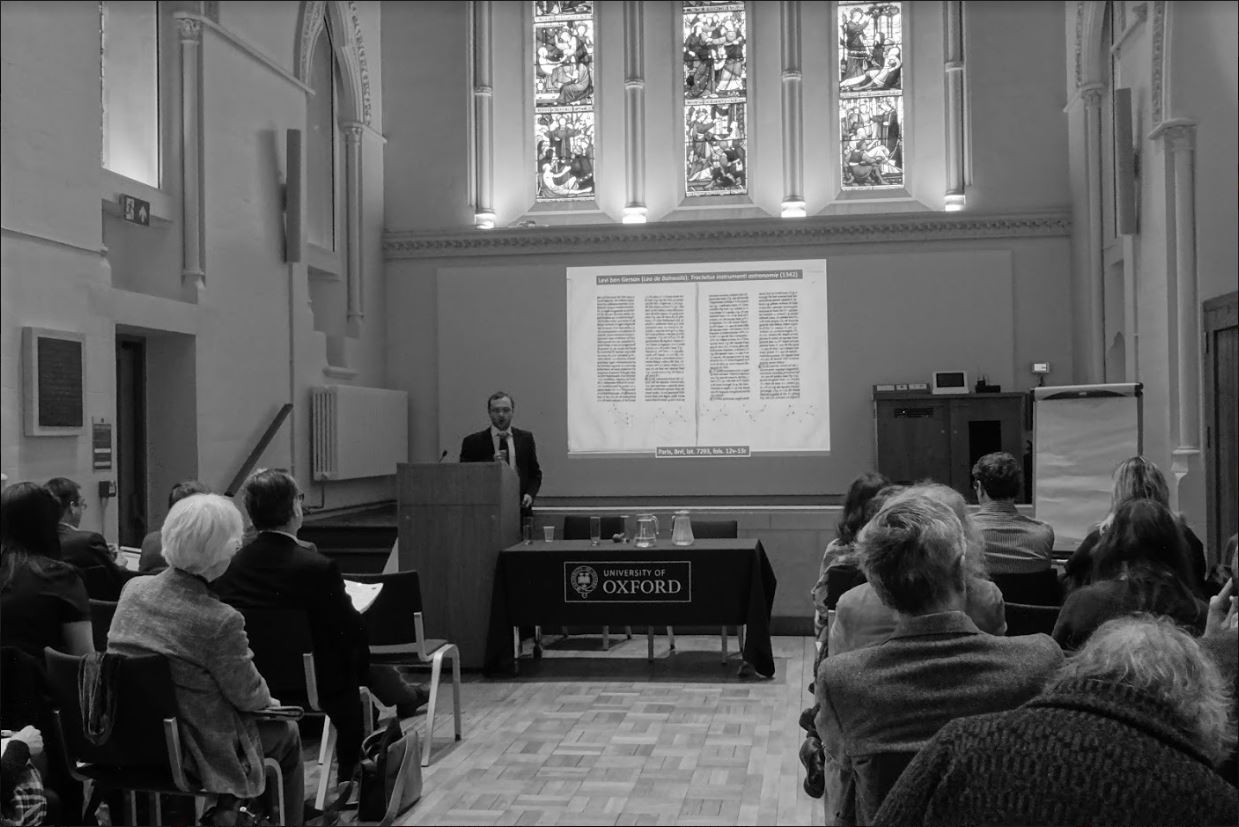
It all started during the kick-off event, a lecture given by Étienne Anheim (EHESS) for the All Souls Late Medieval and Renaissance Music seminar (7th February 2019), hosted by Margaret Bent. The comparison between the Parisian “Sainte Chapelle” and the Avignon papal palace chapel showed how an appointment at the latter, despite the fact that it was built later, established itself as the ultimate honour for singers, offering them high ecclesiastical position and a shared cultural identity.
The study day in itself started, after the opening remarks delivered by MALMECC PI Karl Kügle, with a second presentation by Étienne Anheim. Studying the social and cultural networks existing between Avignon and Italy, mostly around 1350, he emphasized the role played by Italian cardinals in offering a market to the artists coming from the Peninsula. This was ideally complemented by a presentation from Oxford’s Sarah Griffin on her work on visual diagrams realized by intellectuals (including Henricus del Carretto, latter followed by the more well-known as Opicinus de Canistris) in order to understand the world. Far from being pointless intellectual exercises, they were produced in a context of research for knowledge. What is more, Pope John XXII initially gathered these minds within the Apostolic Penitentiary (i.e. the tribunal responsible of dealing with matters such as weddings and excommunications), in order to provide them with a perpetually stimulating intellectual atmosphere.
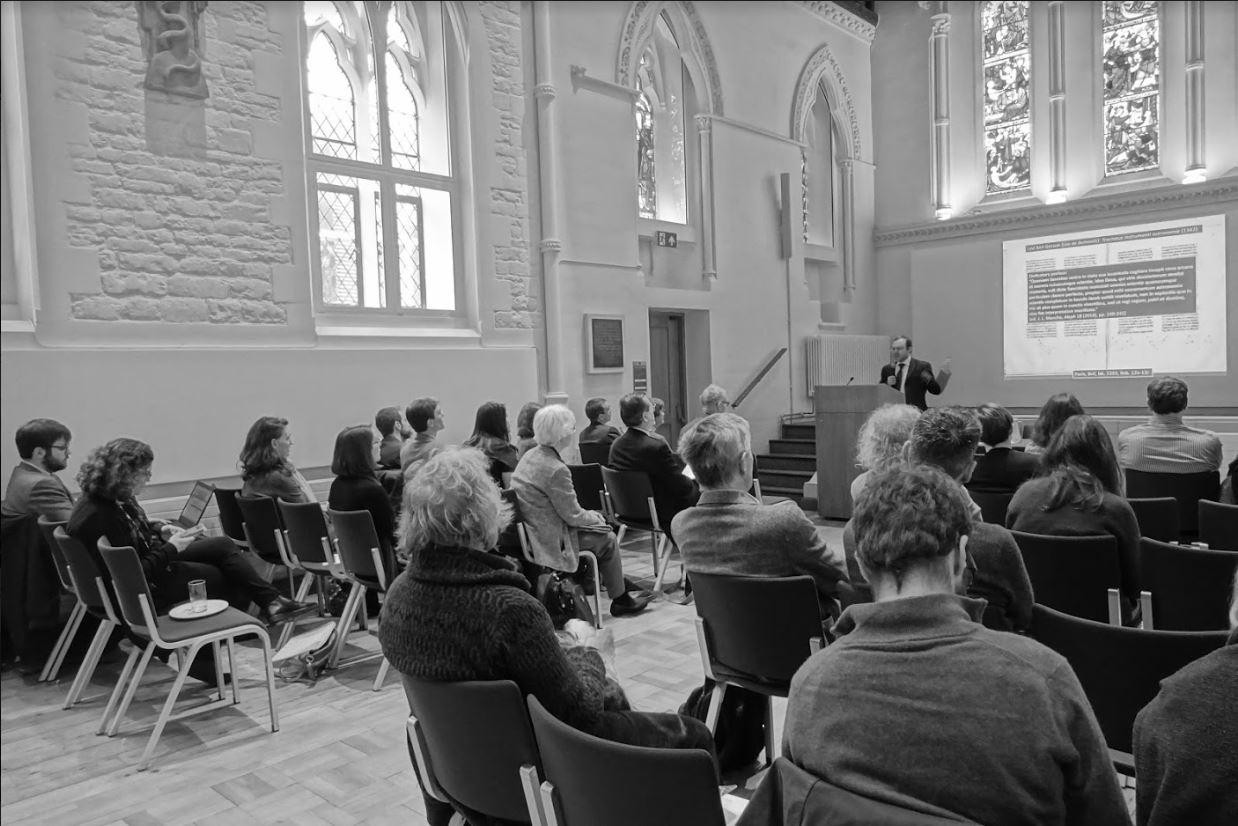
The second session of the day led participants to regions less spontaneously associated with the cultural activities of Avignon. James Hillson (Cambridge) underlined, nonetheless, the active presence of Englishmen in Avignon up until the 1340s, a period during which they appeared to be of sufficient renown to contribute to the tombs of Pope John XXII and cardinal Arnaut de Via. The Holy Roman Empire’s contribution to the culture of Avignon was investigated by MALMECC postdoc David Murray through the case of the Salzburg archbishop Pilgrim von Puchheim. The connections he maintained with major figures including the cardinal-filled Aigrefeuille family, even after he left Avignon, shows how people not only brought their own backgrounds to Avignon but also left the city with new views and aesthetics they then tried, and often managed, to implement in their home regions.
We turned back to musical matters with Karl Kügle, who presented what is currently known about music performed in Avignon. Beyond the list of manuscripts, he highlighted the idea that popes were not to be seen as the only patrons of music. The fact that evidence is missing about their patronage or musical activities during certain periods of time should lead scholars to have a closer look at cardinals. Perhaps something is hiding there which we don’t yet have any idea of. The morning ended with a presentation by Maria Sofia Lannutti (Florence), Antonio Calvia (Pavia), and Chiara Martignano (Florence), of a stimulating new ERC funded project, European Ars Nova: Multilingual Poetry and Polyphonic Song in the Late Middle Ages (Università degli Studi di Firenze). It aims to study the corpus of all the poetic texts performed by Ars Nova musicians between the fourteenth and the early fifteenth centures through a catalogue of extant manuscripts, scientific editions of texts, and a repertory of poetic and musical structures.
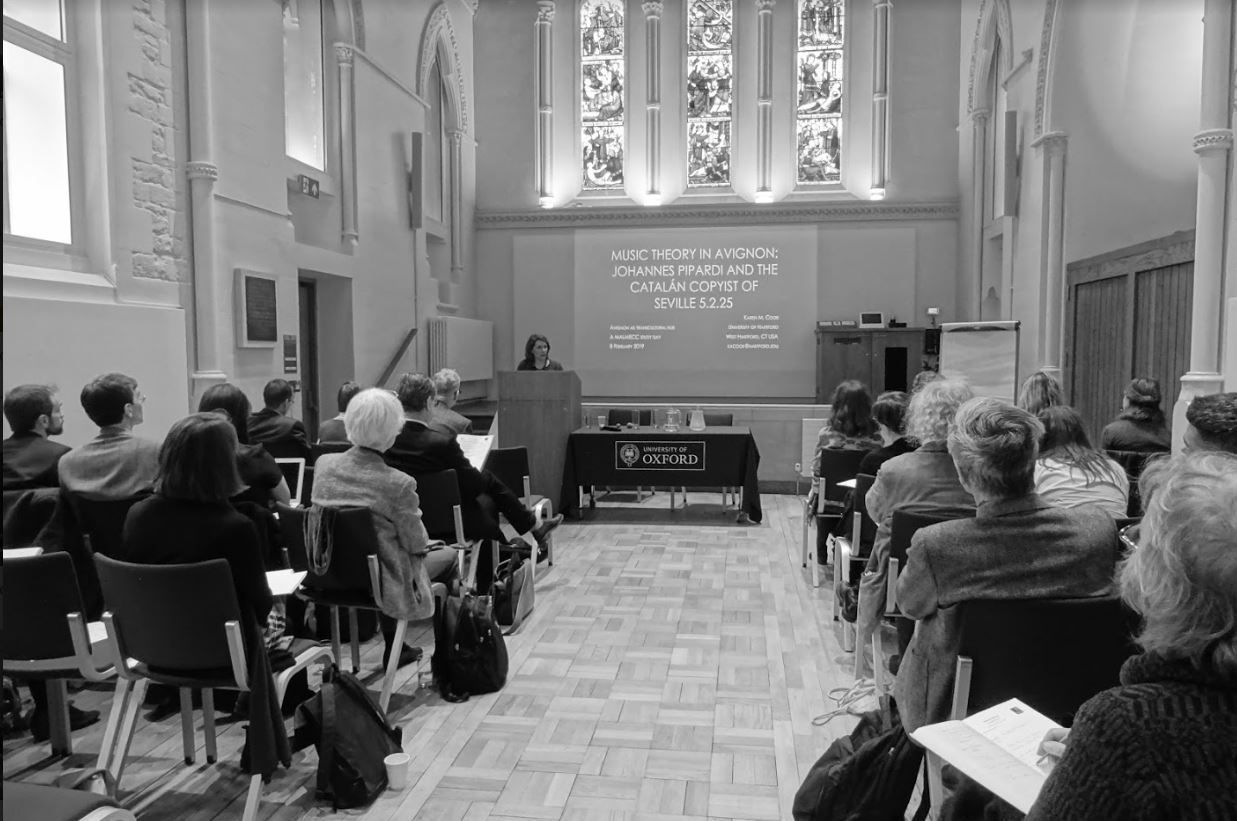
After a well-deserved lunch, participants turned back to late medieval scholars. Philipp Nothaft (Oxford) emphasized the scarcity of evidence for any “hard science” (to use a modern label) patronage between the 1270s and the pontificate of Clement VI (1342-1352). He convincingly argued that the latter was more an exception than the norm, the other popes paying less attention to these matters. From a musical perspective, Karen Cook (Hartford) followed the trail of a late fourteenth century music theorist, Johannes Pipardi, who interestingly appears to have been a cardinal’s protégé, and not a pope’s man. This echoed the question raised earlier by Karl Kügle.
Stefano Cingolani (Barcelona) had the attendees going for a last trip, this time to Aragon. He showed the clear musical dependence of the Catalan kings vis à vis Avignon, and the influence the pope’s chapel had on the king’s musical entourage.
The day was closed by MALMECC postdoc Christophe Masson’s remarks about the cultural importance of the 1378 Great Western Schism, during which two popes, one in Rome, one in Avignon, faced each other. He proposed a working hypothesis that a transnationalist model was fostered in Avignon. This could have made the popes and cardinals willing to continuously attract artists from all over Europe, notwithstanding the fact that some may have come from regions following the Roman pope, rather than that of Avignon.
The day proved extremely thought-provoking, and the discussions went on late after the end of each session. The MALMECC team is thus very grateful to all the speakers and attendees for their invaluable contributions. We now look forward our next event, the Transnationalism at Court colloquium (University of Liège, 21st-22nd March 2019). More detail on this can be found by clicking here.
Pictures kindly provided by Chiara Martignano
As well as researching and writing, a large part of academic work is presenting your findings. Christophe's work is featured in the recently published conference proceeding, La Paix de Fexhe (1316) et les révoltes dans la Principauté de Liège et dans les Pays-Bas méridionaux. Here, he presents a post which looks at life in the courts of the prince-bishops of Liège. drawing on some of the themes of his paper.
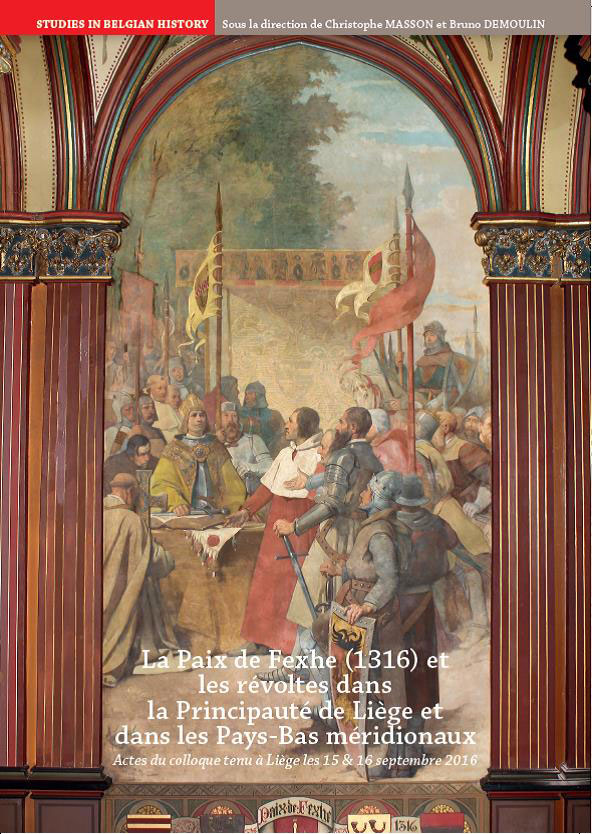
In the early fourteenth century, the principality of Liège experienced numerous dramatic events. Sudden deaths of its prince-bishops, violent political uprisings, and familial wars occurred too frequently to let the country be at peace. Amongst all of this, the Peace of Fexhe (18 June 1316), signed in a small village located some kilometres away from the capital, was considered by nineteenth-century scholars—and some modern journalists, history enthusiasts, and politicians—as the time where the prince’s monocratic power was put to an end and replaced by democracy. Which, as everyone knows, was already present—and perhaps allegedly born, (sorry about that, Athens)—in the late Middle Ages…
The reality is obviously far more complex. This text was probably, before anything else, a truce between exhausted parties. In fact, between 1315 and 1317 a dramatic famine swept across almost all Europe that left people barely able to do anything other than strive to find food, or to make decent business. Nonetheless, the truce gives us the opportunity of uncovering the political tensions of the day, as numerous political problems appear in the text. It is also a chance to meet the people who mattered in Liège political life, and the ones who tried—and sometimes succeeded—in joining them.
Urban aristocrats tended to aggregate themselves to nobility, thus copying some of their habits: listening to or reading romances, wearing coats of arms, walking with a sword at their side…
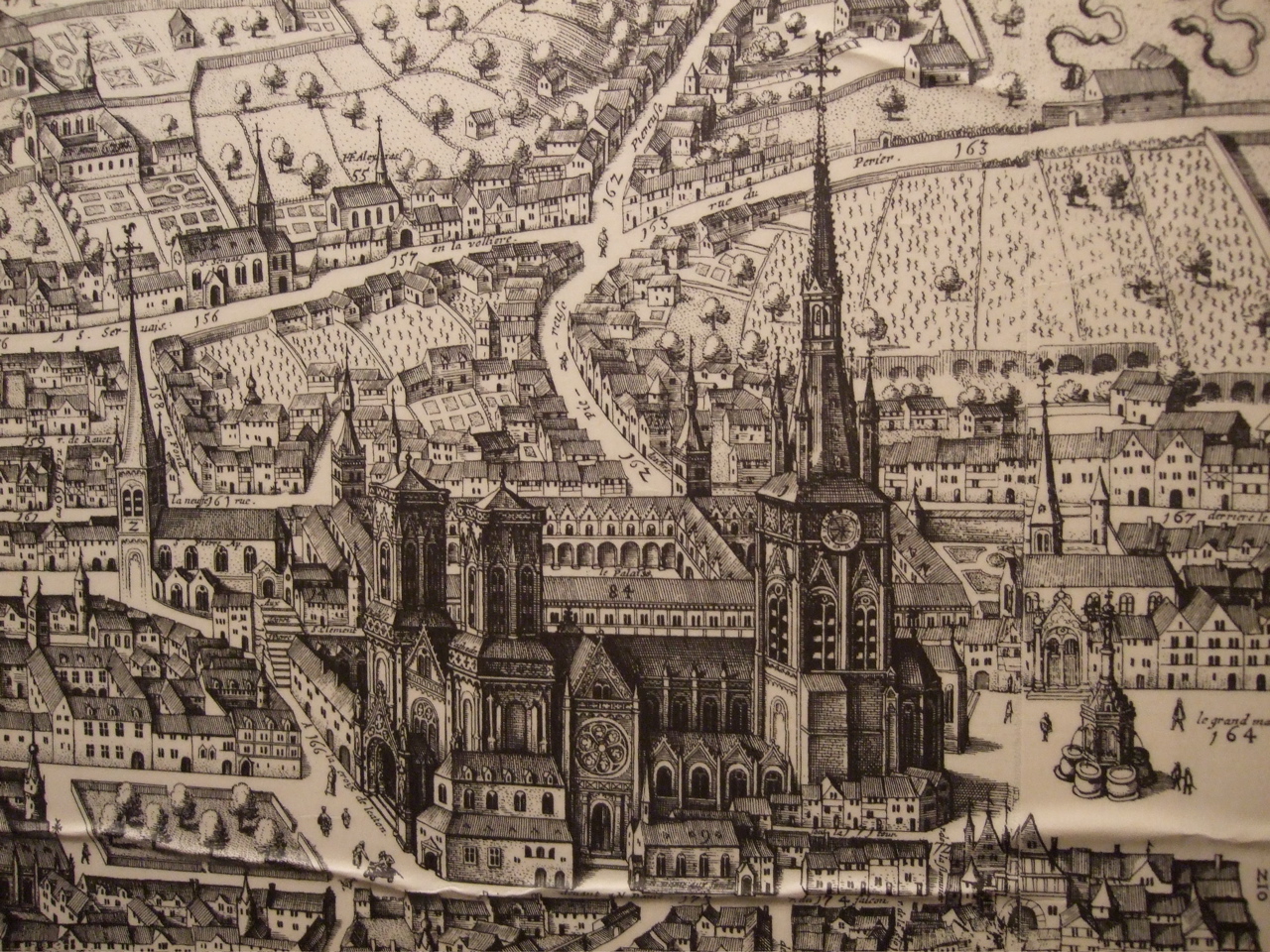
As a principality, Liège housed a court, organized around its prince-bishop. A subject of the emperor, but at this period increasingly close to the king of France, the prince-bishop had to deal with the canons of his cathedral, (Saint-Lambert), who challenged his authority as ruler of the land; with the nobility; with the urban aristocracy; and with professional guilds. He organized his court around two cores. The first one gathered his relatives—brothers, nephews, and cousins—and local allies whom he entrusted with military, judicial, administrative, or diplomatic duties. The second one was composed of the canons of Saint-Lambert, who also acted as his officers. Mostly coming from the upper part of society, they were raised amongst knights or high-profile merchants, and so brought with them an education, that relatively matched, but of course on a lower level, the one enjoyed by their princes.
A 16thC engraving of the cathedral of Saint Lambert
War and prowess were essential in this culture, which saw princes fighting on horseback or on foot amongst their people, even using the officially-forbidden-by-the-pope crossbow to shoot some of them down! The bishop Adolphe de La Marck, who signed the Peace of Fexhe, was even compared to Hector by a contemporary chronicler! Urban aristocrats tended to aggregate themselves to nobility, thus copying some of their habits: listening to or reading romances, wearing coats of arms, walking with a sword at their side… Nonetheless, we strangely do not find evidence of jousts or tournaments held in the principality. This does not mean that the local nobility despised these activities. After all, they took part in the ones organized nearby. Maybe the ecclesiastic identity of prince-bishops prevented them from organizing such events… But it did not prevent them from shaping an original court culture, mixing aristocratic and ecclesiastical values, which was more or less imitated by everyone who aspired to an official position. Because to join the people that mattered, the best way was still to act like them before becoming one of them…
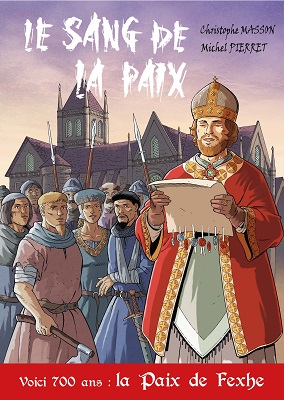
As part of his work on the Peace of Fexhe, Christophe even wrote the text for a comic produced by the cultural department of the province of Liège! More information on 'La Sang de la Paix' can be found here
What do you leave out when you only have 30 seconds to explain your research? That was the challenge facing Laura and our other researchers recently in the context of our upcoming project videos. In this post, Laura explains some of her more painful editorial decisions.
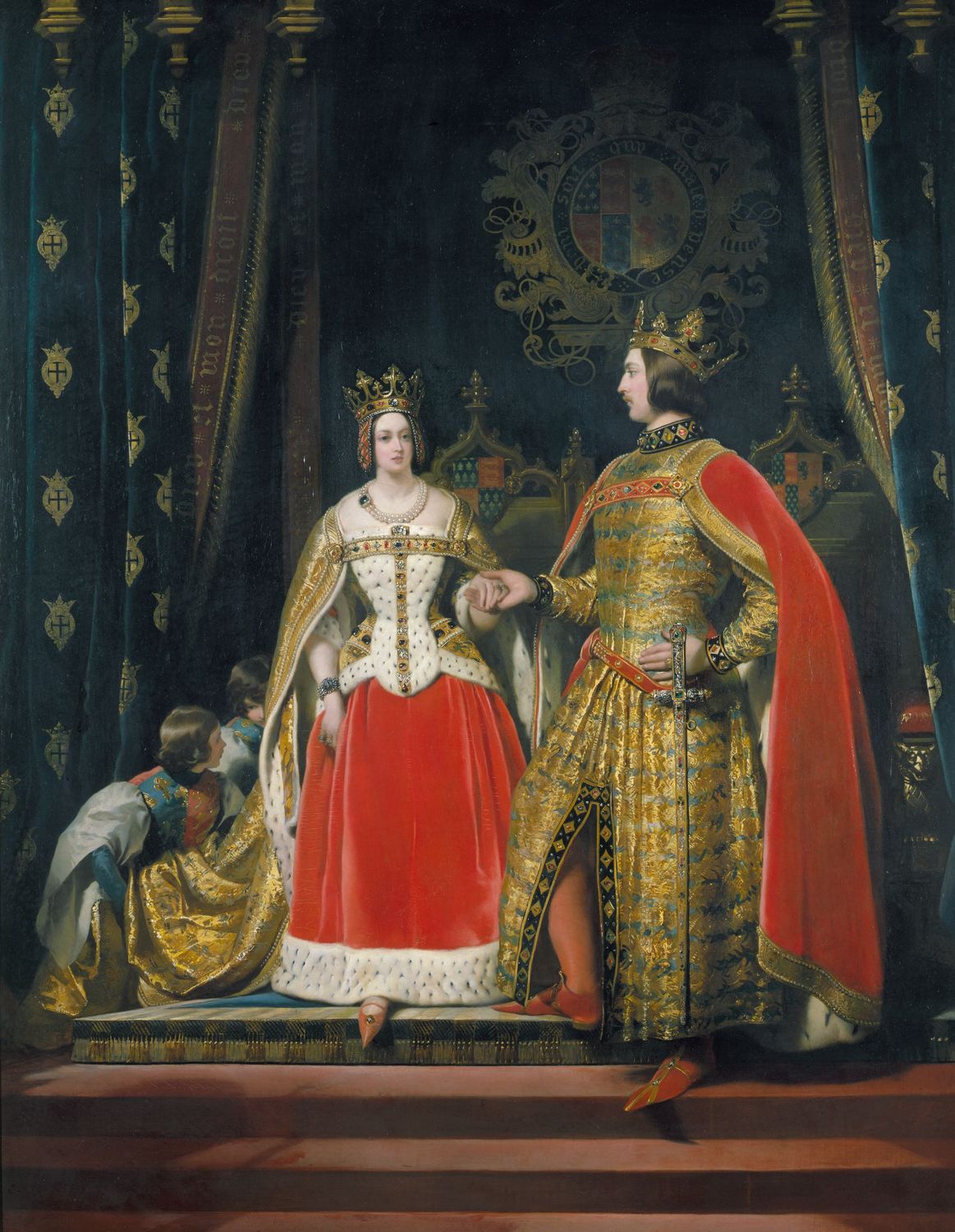
Queen Victoria and Prince Albert as Edward III and Philippa of Hainault at a costume ball of 1842 (RCIN 404540)
Philippa of Hainault and Edward III were married at York Minster in January 1328. They went on to enjoy one of the happiest royal marriages in medieval Europe. Yet their union originated as a matter of political convenience, even desperation. While estranged from her husband, Edward II, and seeking refuge on the continent, the current queen of England, Isabella of France, traded her son’s marriage in return for military aid and support from Philippa’s father, Count William the Good of Hainault, Holland and Zeeland.
The queen’s coup was a triumphant success: Edward II was deposed and imprisoned (conveniently dying nine months later) and her son was crowned as Edward III on February 1327. Philippa of Hainault arrived in England to marry the new king in December 1327, barely a week after the funeral of her murdered father-in-law, Edward II. Aged anywhere between ten and fifteen years old, she found herself entering a political and family quagmire. Her new husband turned out to be a powerless figurehead, while real power in the regency government remained in the hands of Philippa’s mother-in-law, Isabella of France, and her possible paramour, Roger Mortimer. On the very day of Edward’s coronation, Isabella awarded herself a truly enormous dower: so great, one chronicler sniped, that barely one third of the realm remained for her son.
The coronation of Philippa, from the chronicles of Jean Friossart
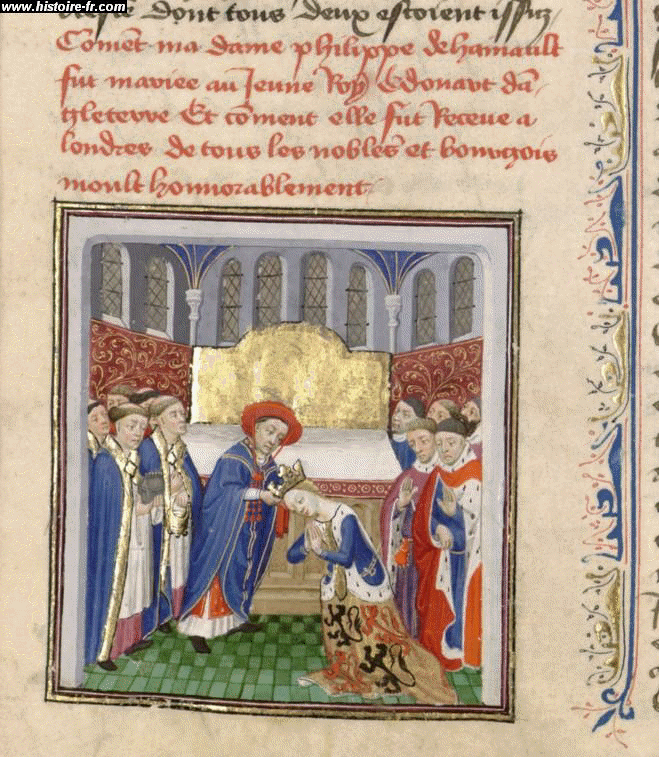
Philippa’s official, public role as queen turned out to be uniquely diminished. The royal marriage was celebrated with pomp and magnificence, but no coronation followed until 1330. Nor did Philippa receive any dower. In May 1328, as the regency government negotiated an unpopular truce with the Scots, the king enrolled on the patent rolls a public promise ‘to assign lands for the dowry of Queen Philippa within a year’. Almost a year later, in April 1329, Philippa was granted an annuity of a thousand marks a year towards the expenses of her chamber, ‘until some provision be made for her estate’, the government records note rather desperately. The problem, of course, was that Edward III could do little about his mother’s continued monopoly on the power, position and resources of the English queen.
This is the context in which I am exploring one of the manuscripts owned by Philippa. But it is difficult to try and outline such a complex web of political problems and family dysfunction in half a minute’s worth of time. Hard choices had to be made, about what to say and what to leave out. And this meant glossing over some of those all-important, pedantic academic details.
an important dimension of the MALMECC project is how we are examining kingdoms that didn’t become nation states in their own right, and so thinking about the court from a transnational perspective.
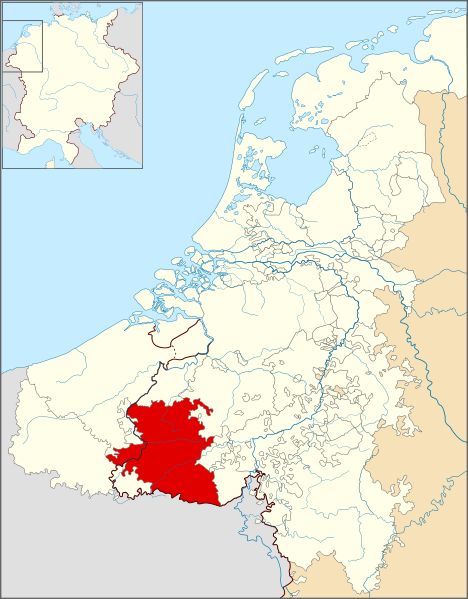
The territory of Hainault in 1350
One problem is explaining where Philippa is actually from. Her father’s territories covered parts of what is today northern France, Belgium and the Netherlands. Its key capital cities were Valenciennes (today in France) and Mons (today in Belgium). I ended up saying that Philippa was from ‘the Low Countries’: it’s just about accurate, but it doesn’t really explain much. Yet an important dimension of the MALMECC project is how we are examining kingdoms that didn’t become nation states in their own right, and so thinking about the court from a transnational perspective.
Another difficulty was explaining Philippa’s isolation in her early years in England. With only thirty seconds, it was impossible to start discussing her expenses and landed estate (or lack thereof). So I had to use a shortcut. As a way of communicating Philippa’s difficulties, I tried to outline her predicament as follows: ‘You’re on your own. You don’t speak English. And you turn out to have the mother-in-law from hell.’ We can all relate to being in a new and difficult family environment, perhaps with hostile relatives. And we can also understand how isolated and lonely it is to live somewhere where you don’t speak the language well.
in the difficult years 1327-1330, learning English would have been the least of Philippa’s concerns, living as she did in a French-speaking court
But while my script might communicate Philippa’s situation in thirty seconds, it is also simplifying more complex medieval realities. Philippa certainly didn’t speak any English when she first arrived. Yet in early fourteenth-century England, this would not have mattered in the slightest! Throughout much of English society, French was still a widely used vernacular. For the royal family and aristocracy, French was spoken as a matter of course: it was the lingua franca (pun intended) of elite life, especially for the laity. Although it’s likely that Philippa did pick up some English during her long life in the kingdom, we don’t actually know if she ever learned the language.
So in the difficult years 1327-1330, learning English would have been the least of Philippa’s concerns, living as she did in a French-speaking court. Yet my video (link on the publications page) suggests that Philippa’s lack of English was a real problem. It’s an unfortunate compromise, but I hope the wider problem, that of the early challenges of Philippa’s married life, still comes across, especially to a non-academic audience.
In the second of her posts on modern views of the Middle Ages, Laura considers how the work of the engaging historian is a careful balancing act between over-simplification and mind-boggling detail. Does a simplistic view of the Middle Ages hide interesting facts, and darker truths, from a non-specialist audience?
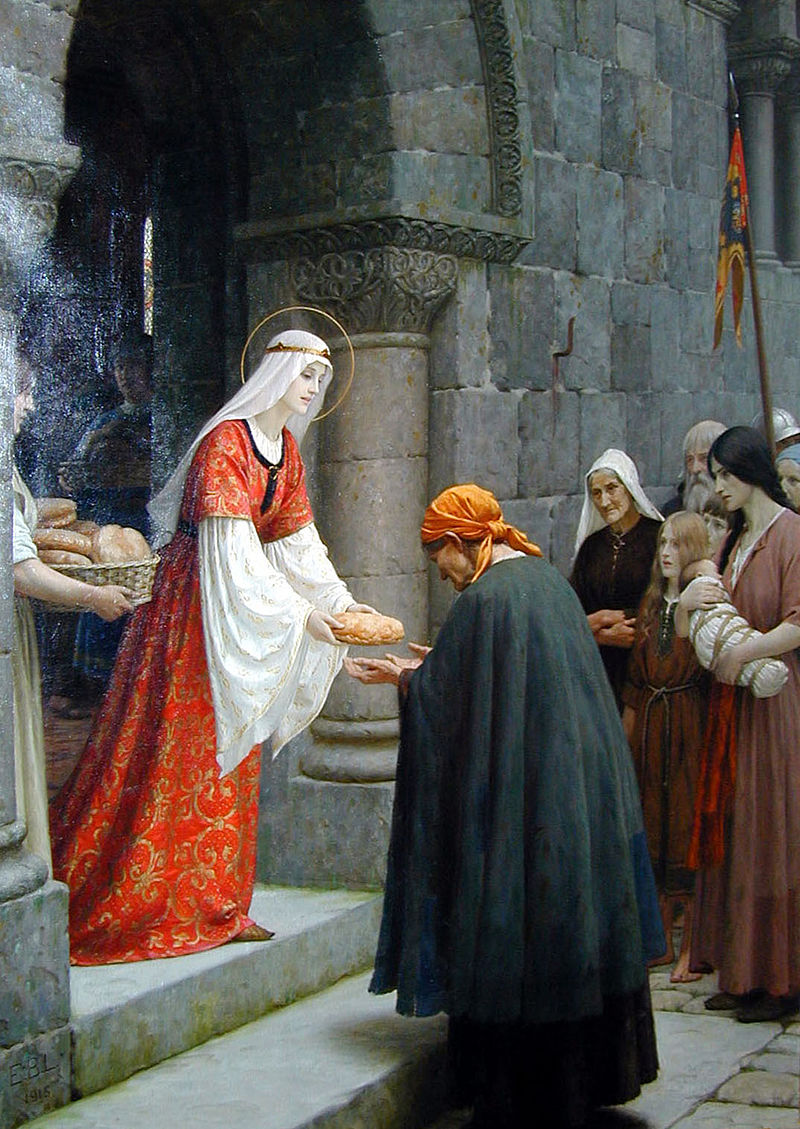
Edmund Leighton, 'The Charity of St. Elizabeth of Hungary', 1895, Collection of Fred and Sherry Ross
In contrast to all the complications of modern life, the Middle Ages is often seen as a return to nature and the land: a healthy outdoor life lived out in the fresh air, rather than sitting in an office all day staring at a computer screen. Medieval peasants did indeed live and farm in a completely ‘organic’, ‘local’, ‘artisan’ and ‘sustainable’ way. But they also regularly starved to death.
Few of us really dream of a world without modern medical care or pain relief. Other visions of the primal simplicity of the Middle Ages are even darker: an all-white world ruled only by rich men, in which women and poor people know their place, Jews are a despised, regularly massacred minority and Muslims feature only as ‘infidels’ to be swept under the trampling hooves of the crusader. Summarised as crudely as this, such an extremist and simplistic view of medieval society seems laughable. But it’s surprising how often imagined medieval pasts have been used to support political violence and hate speech. The famous battle cry used by the knights fighting in the First Crusade, ‘Deus le volt’ [God wills it], for example, has been used as racist graffiti.
Much of academic research is about fiddly details and tiny nuances: a re-dating of a window here, a re-reading of a source there, an extended and deeply dull argument (perhaps across decades) about exactly what happened to the manorial economy of Suffolk after the Black Death.
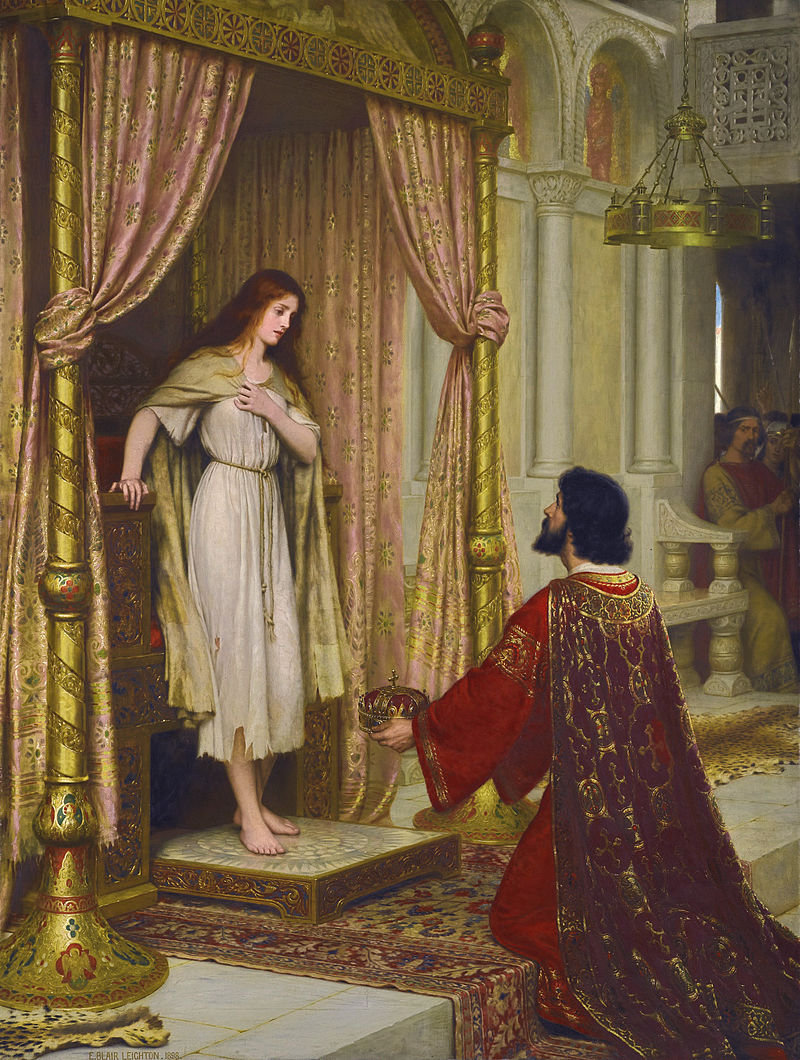
Edmund Leighton, 'The King and the Beggar-Maid', 1898, Collection of Fred and Sherry Ross.
So part of academic public engagement is pointing out that things were more complicated than they first seem. Just like society today, the medieval world was rich in its contradictions, complexities and paradoxes. Yet it can be difficult. Much of academic research is about fiddly details and tiny nuances: a re-dating of a window here, a re-reading of a source there, an extended and deeply dull argument (perhaps across decades) about exactly what happened to the manorial economy of Suffolk after the Black Death. It can be boring and incomprehensible to a non-specialist audience, even if the result is that our understanding of say, life in Suffolk in the later fourteen century is completely transformed by the end of this long, slow process. The romantic dream-world remains far more fun!
So the challenge when making a 30-second video is to summarise our work without all those pedantic details that academics spend most of their time picking over. Hard choices have to be made about what to leave out and what to put in, as in my recent experience of making a video about Philippa of Hainault’s early years in England. More about this in my next post!
In the first of a new series of posts on the perception and reality of the Middle Ages, Laura announces a public engagement activity and considers why the imagery of the medieval era has been so often used to glorify war.
The MALMECC team are currently in the process of making videos about their individual research projects. We have 30 seconds to summarise our work!
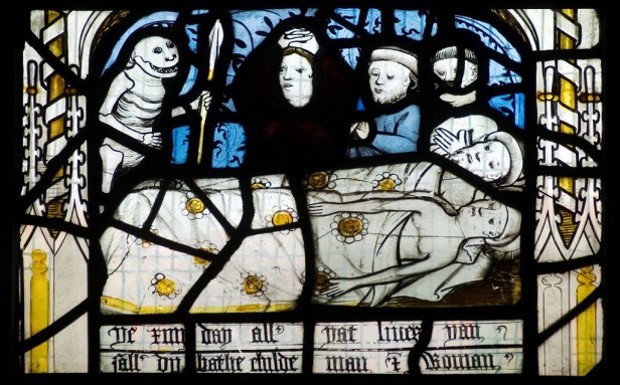
All Saints North Street, York
Public impact and engagement is an important aspect of academic life these days. Like our website, blog and twitter account, creating these videos is another way for us to share what we are doing with a wider audience. We would like it if members of the public understand how and why we are trying to rethink late medieval European court culture, and (hopefully), we can communicate why it matters. The Middle Ages are often dismissed as a ‘Dark Ages’. Sometimes, people imagine a world of oppressed peasants living in misery: forced by an all-powerful Church into rigid social conformity and macabre superstitions, rarely leaving their villages and regularly dying of the plague. This is a world entirely without books, music, dance and culture. So it’s easy for our project to show some of the ways that this was not the case.
More complex and difficult to contest is a more positive vision of the medieval past that comes closer to some of the cultural events and ideas that our project is exploring, but is still a very partial view of the Middle Ages. This is the romantic vision especially beloved by the Victorians, of heroic knights errant jousting in tournaments, winning fame and honour from admiring maidens wearing wimples, and enjoying splendid banquets afterwards.
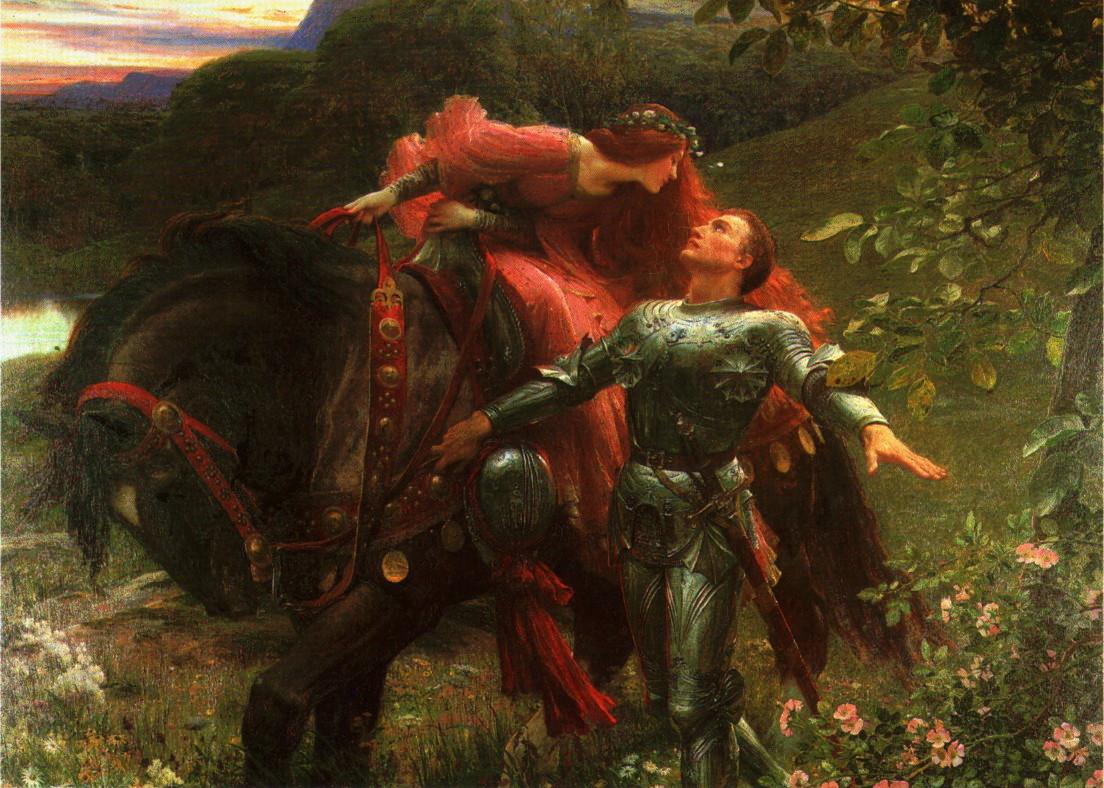
Painting by Sir Frank Dicksee, illustrating Keats’ poem ‘La Belle Dame sans Merci’ (Date unknown)
Lots of these ‘medievalist’ dreams can be understood as visions of return to a simpler age, both for good or bad. In Oxford as elsewhere across the United Kingdom and Commonwealth, we have just commemorated the 100th anniversary of Armistice Day. In both Britain and Germany after World War One, many war memorials used medieval imagery to express the heroism and bravery of the soldiers who died during the Great War. In this example from Leeds by Henry Charles Fehr, the British ‘Tommy’ is shown in the guise of St George slaying the dragon. In Germany, the octagonal form of the now-destroyed Tannenberg Memorial echoed the Castel del Monte built in Apulia by the Holy Roman Emperor Frederick II in the 1240s, and the castles of the Teutonic Knights.
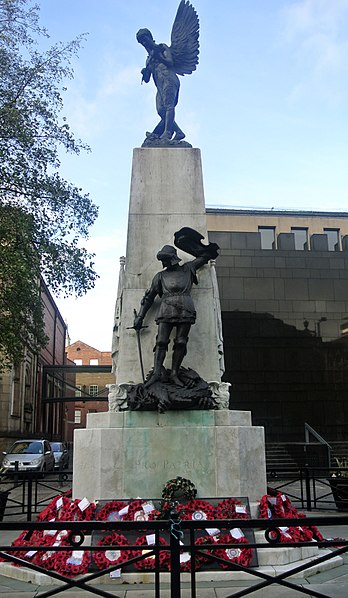
Leeds war memorial
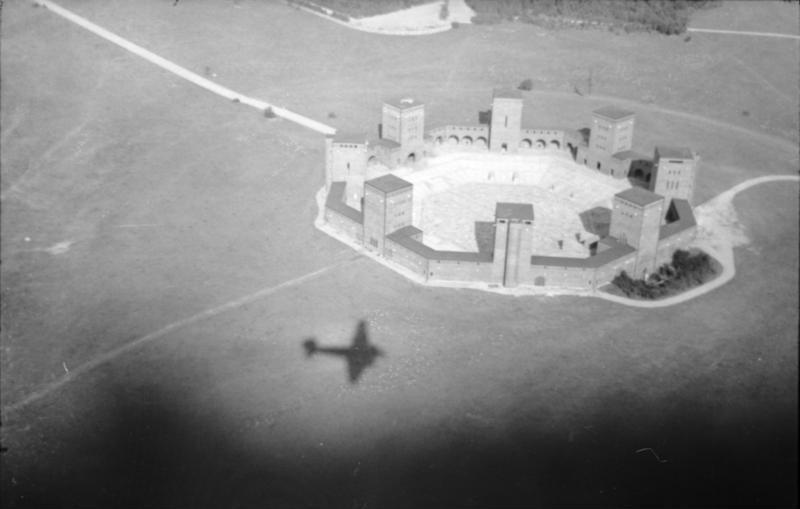
Tannenberg Memorial, Germany
Soldiers were explicitly compared to crusading knights, and legends such as that of the ‘Angels of Mons’ emerged, where phantom bowmen from the battle of Agincourt were supposedly seen coming to the aid of British soldiers at the Battle of Mons in August 1914. The destruction caused to medieval cathedrals such as Reims underscored the horror and devastation of modern, machine-made warfare, in contrast to the seemingly timeless ideals and moral values of the Middle Ages.
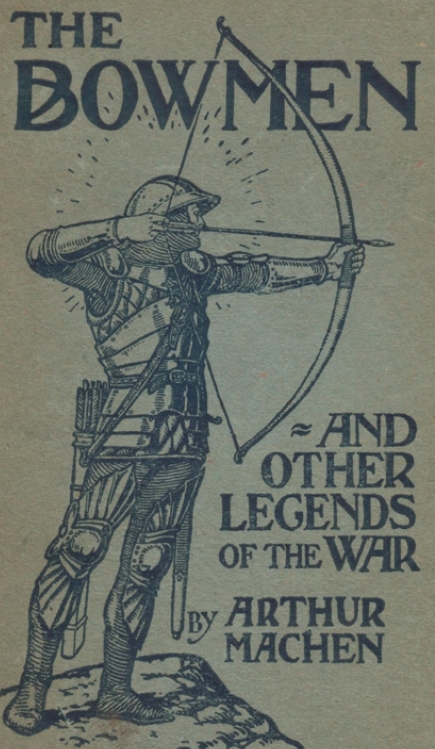
"The Bowmen" - A possible origin of the legend of the Angels of Mons
Surveying the carnage of the trenches and the economic hardship that followed in the post-war years, it is not surprising that people yearned for a return to a supposedly simpler, kinder world, of fair ladies and gallant, chivalric knights.
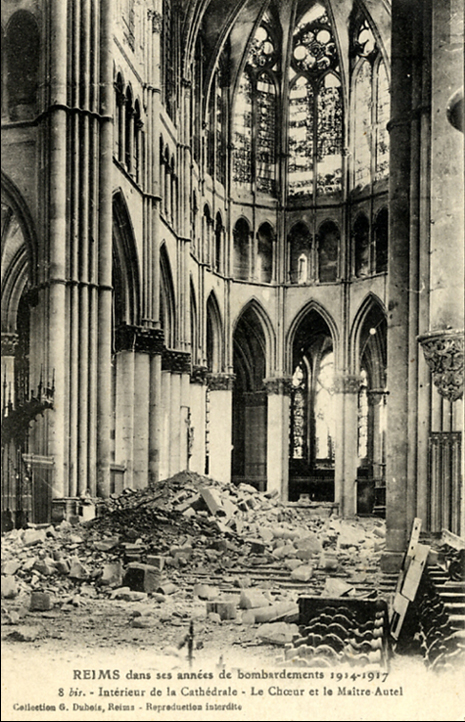
If you would like to find out more about the role which ideas of medieval life played in memorialising the 1914-18 war, please see Stefan Goebel, The Great War and Medieval Memory. War, Remembrance and Medievalism in Britain and Germany, 1914-1940 (Cambridge University Press, 2007)
Header image: Stained glass from the parish church of All Saints, North Street, York
The second study day hosted by the MALMECC project (2nd November 2018) was devoted to the phenomenon of translingualism, in our case how phenomena—be they concepts like courtliness, musical or literary forms, or for that matter individuals themselves—pass between linguistic zones. Exchanges across linguistic frontiers and the effect that the knowledge of multiple languages can have on someone’s cultural production are topics of central importance to the work of the MALMECC team. As such, we were delighted to be able to discuss these and related questions with a range of expert interlocutors representing the fields of medieval music, art, and literature in German, French, Dutch, English, Occitan, Catalan, Welsh and, of course, Latin.
After words of welcome from MALMECC’s Principal Investigator, Karl Kügle, Frank Willaert opened proceedings with a rich and wide-ranging paper entitled ‘Hovedauncis and rés d’Alemaigne’. It took as its starting point Machaut’s knowledge of the German-language song repertory of the thirteenth century, crystalized in his mention of a rés d’Alemaigne on which he claimed to have based the ballade ‘N’es qu’on porroit’ in Le Voir Dit. From there, Prof. Willaert traced the spread of Germanic songs, music, and musicians throughout later medieval Europe. He covered not only the massive demand for German wind and brass instrumentalists—Philip the Bold, Duke of Burgundy and Gaston Fébus both retained a number of them, while Wenceslas IV, King of the Romans loaned his German ‘King of the Minstrels’ to favoured servants—but also the spread of songs of Low German origin, principally the virelais-ballade along the Rhein. From the 1380s, there emerged a trend for pieces labelled ‘hovedaunce’ or ‘hovedans’ in both Low German sources such as the Hague songbook and also in the writing of English authors Chaucer and Gower, the first of whom may have come into contact with these pieces via the Rhenish musicians of his patron John of Gaunt. Prof. Willaert’s paper demonstrated vividly the wide horizons of the medieval court, as well as the benefits of comparative study on the basis of medieval, not modern, geographies both in terms of linguistic areas and the cultural spheres which did not necessarily overlap.
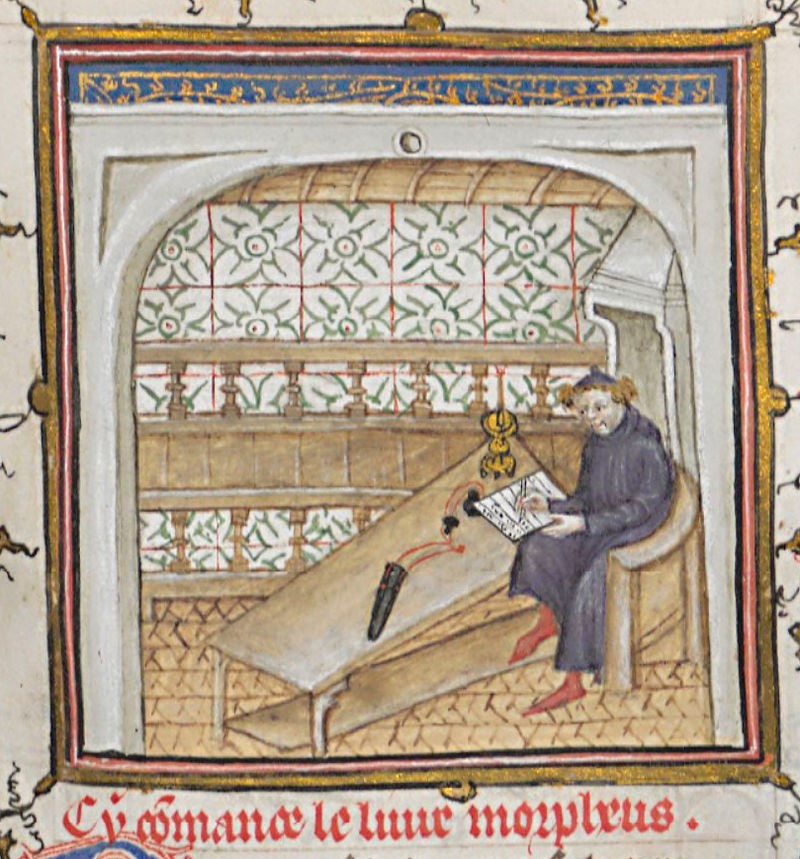
Machaut writing the Morpheus, with which he says he sent Ballade 33 to Toute Belle.
[Paris, Bibliothèque nationale de France, ms. fonds fr. 9221, f. 189r (detail)]
MALMECC’s own Karl Kügle, in his paper, ‘A song about the Porridge King and Machaut’s B33 re-visited’, took the lead from Prof. Willaert’s paper in pursuing the topic of Germanic influences on Machaut. In it he pursued a possible source for Ballade 33 in Le Voir Dit, namely the song ‘Der kuninc Rudolp’ by the German Sangspruchdichter known as ‘Der Unverzagte’ [‘The Unrelenting’] about the Habsburg duke Rudolf I. This German piece satirizes the infant duke, a contender for the imperial throne, and therefore an enemy of Machaut’s Luxmburg patron, the blind King John of Bohemia. Kügle demonstrated in detail how the peculiar compositional practice that lies behind the French piece can be traced back to the extreme melodic economy of the German Spruch, indicating the exciting possibility that Machaut, as well as his recognised knowledge of the French trouvère repertory, was also acquainted with at least some song in German. Conversation after the paper circled around the nature of artistic influence and parody, as well as poets’ claims to novelty in this context.
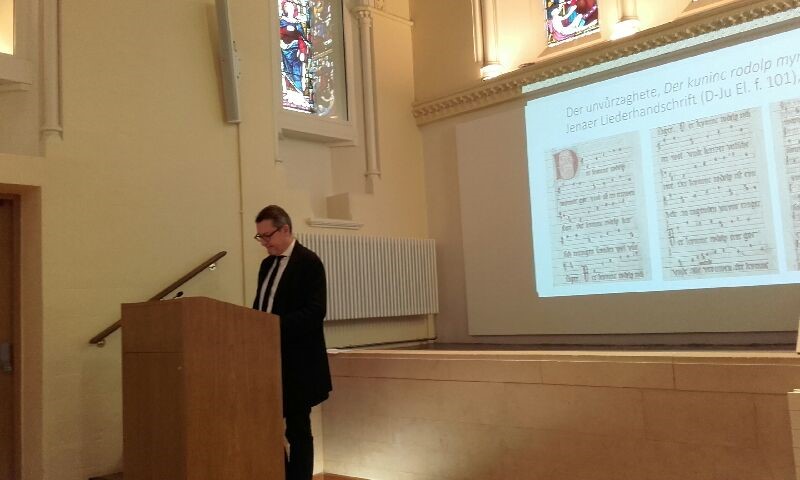
David Murray, post-doc on the MALMECC team, focussed on two aspects of translingual transfer in the corpus of the anonymous composer the Monk of Salzburg. First, the adoption of the melody of the French chace ‘Umblemens vos pri merchi’ for his three-part canon ‘Iu, ich jag’ bears witness to the years spent by the Monk’s patron, Archbishop Pilgrim von Puchheim, at the Papal court in Avignon. The German song itself later became the model for a Latin song praising the Virgin Mary. In the second half of his paper, Murray proposed a new social context for the adoption of the virelai-ballade form at the archiepiscopal court of Salzburg, long thought of as evidence of the influence of Machaut via the connections between Salzburg and Prague, where the French composer spent more than a decade as secretary to King John of Bohemia. Instead, he suggested that the form enjoyed particular prominence in the circle around Leopold III of Habsburg, a close political partner of Archbishop Pilgrim. Discussion of this paper focused on the nature of the exchanges between the sacred and the profane realms and the value of poetic and musical form (including the relative status of polyphony and monophony in corpora that have both) in the transmission of cultural goods.
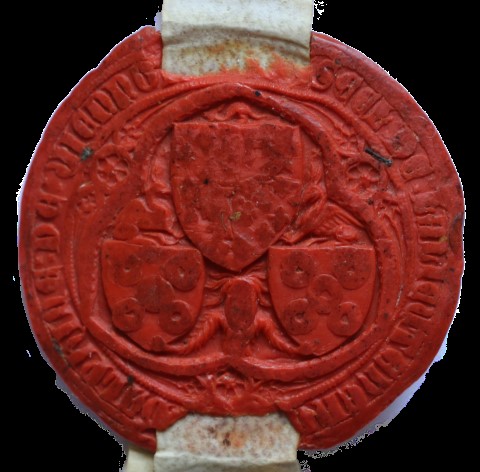
Seal of Pilgrim von Puecheim, from Salzburg, Archiv des Stiftes St Peter, no 467
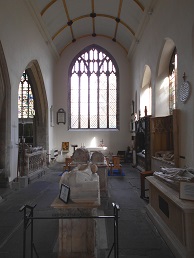
In the last of her posts on the Priory Church of St Mary, Abergavenny, Laura considers he Tree of Jesse, a unique surviving monumental sculpture.
© South Wales Argus
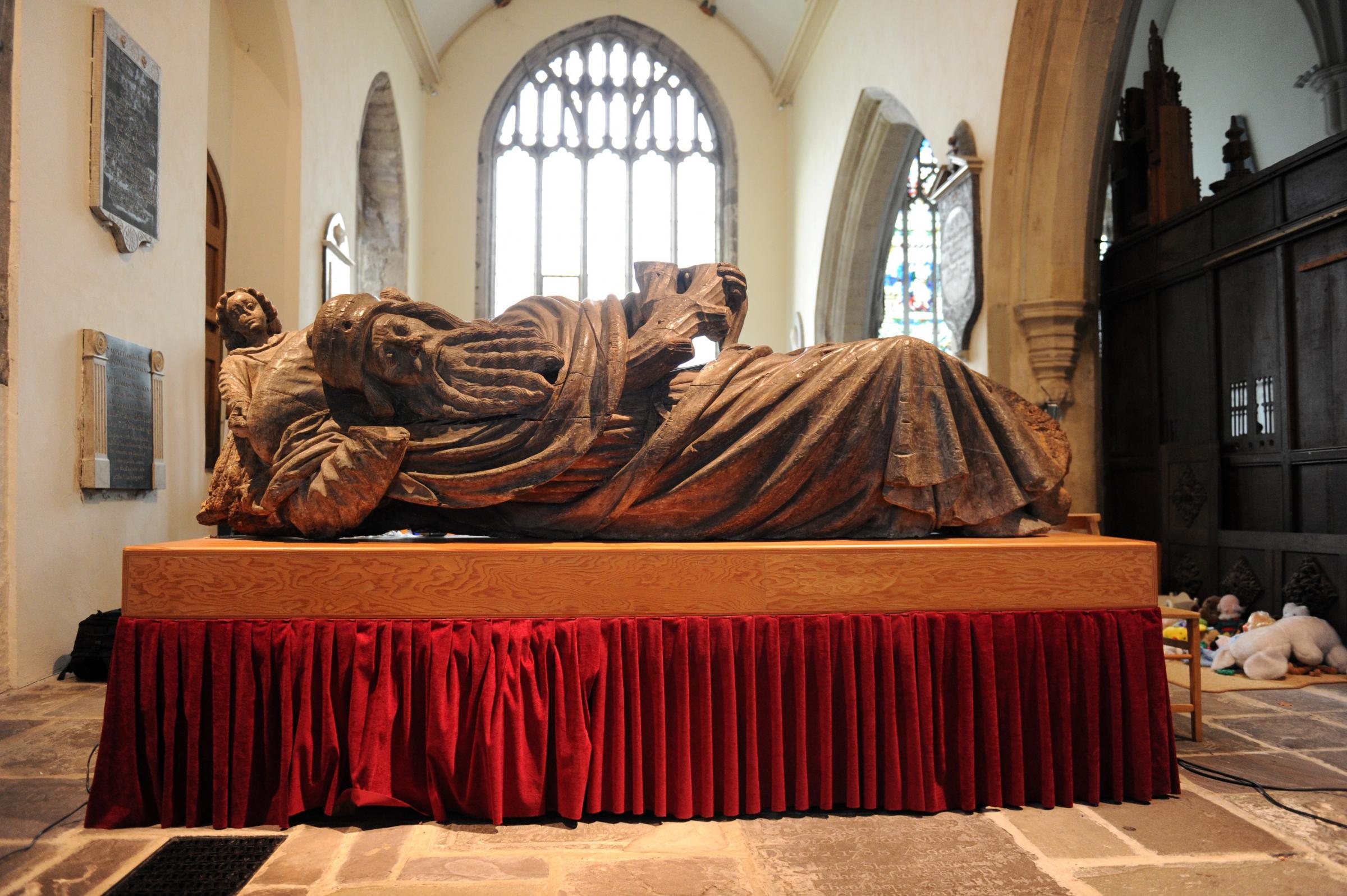
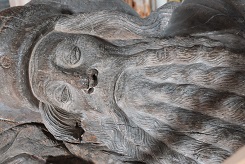
The images of saints, apostles and martyrs on the Herbert tombs at Abergavenny are not the only rare survivals in the church. The Abergavenny Tree of Jesse is a unique surviving monumental sculpture. Many, if not the majority, of the devotional images inside and outside British churches in the Middle Ages were carved in wood. Almost all have since been destroyed.
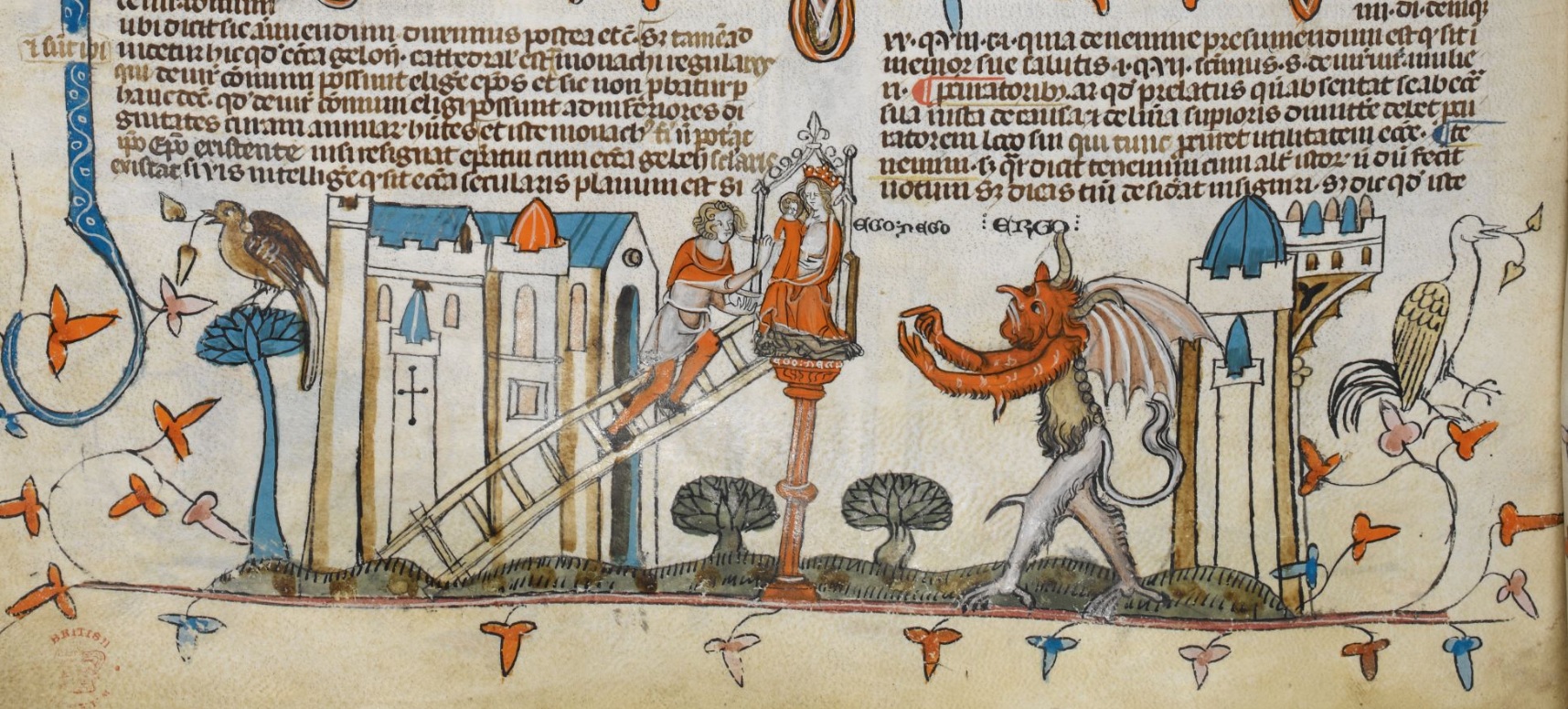
Smithfield Decretals f.209v (British Library Royal MS 10 E IV, f.209v)
So what was the Tree depicting?
Jesse was the father of King David, a key figure in the Bible and an ancestor of Christ. Medieval psalters often included an image of the lineage of Christ to mark psalm 1, ‘Blessed is the man’. It would take the form of a large and leafy tree. Jesse would be shown lying at the bottom, forming the ‘root’ of Christ’s human ancestry. David would be prominently included, often playing or tuning his harp.
Tree of Jesse, in The Winchester Psalter
Visually tracing the lineage of the royal House of David, the image was redolent of ancestral authority- not just the authority of Christ and his teachings, but of the psalms themselves. Found in the Old Testament, the psalms were thought to have been written by King David. They were also believed to prophecy the coming of Christ. Lines such as verse 19 of the ‘Crucifixion’ psalm 21: ‘They parted my garments amongst them; and upon my vesture they cast lots’ were thought to have foretold the events of the Crucifixion, as when the soldiers cast lots for Christ’s clothes. Christ himself also quoted from psalm 21, reciting verse 2, ‘my God, why hast thou forsaken me?’ in his last moments.
The c.1150 Winchester Psalter in the British Library (Cotton MS Nero C IV) shows Jesse lying at the foot of the page on f. 9r. The figures of King David, the Virgin and Christ form the tree trunk sprouting up from Jesse’s ‘root’. At the very top of the tree, above the head of Christ, is the dove of the Holy Spirit. The Abergavenny Tree of Jesse dates from centuries later, but we can see the same trunk pushing up from his chest, gracefully curving up from the folds of his robes.
The sheer scale of the figure of Jesse gives some idea of how large the completed sculpture would have been- probably reaching to the roof of the priory church. Originally painted and gilded, it would have been an awe-inspiring sight, emphasising the majesty of Christ and the greatness of his lineage. Courtly aristocrats, with their own love of ancestry, dynasty and lineage, may well have been happy to bow down before it.
In this post, Laura steps slightly out of the MALMECC time period to write about Lady Anne Clifford and the 'Great Picture', an important work of female patronage now housed at the Abbot Hall Art Gallery and Museum, Kendal, Cumbria
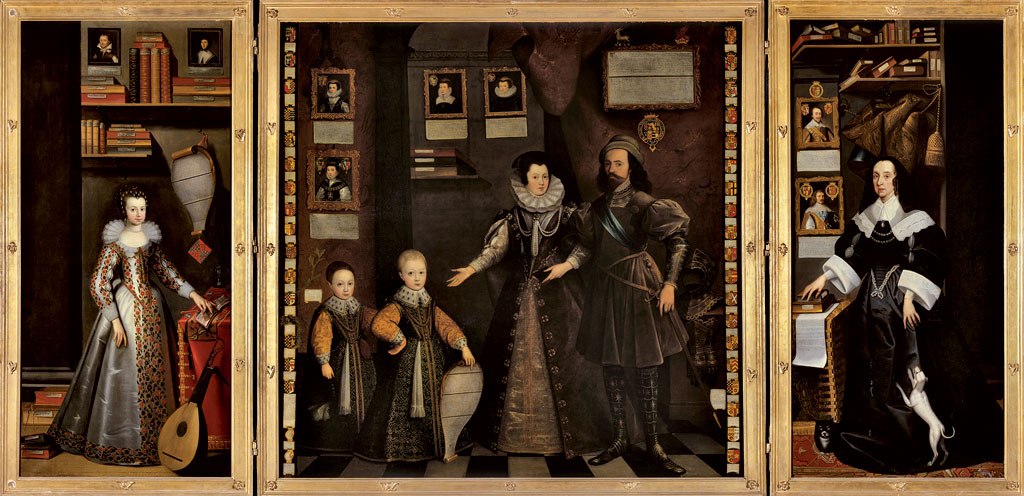
From 16th-18th July, project member Laura Slater attended the conference: Lady Anne Clifford: Engagements in Culture at the Abbot Hall Art Gallery and Museum, Kendal, Cumbria. The gallery is home to an important work of female cultural patronage: the ‘Great Picture’ commissioned by Lady Anne Clifford around 1646, perhaps from the Flemish artist Jan van Belcamp.
Attributed to Jan van Belcamp, The Great Picture Triptych (1646), Abbot Hall Art Gallery
Lady Anne Clifford was one of the most formidable women in seventeenth-century England. She was the only child of George Clifford, third earl of Cumberland, a leading light of the Elizabethan court and an intrepid privateer who made numerous expeditions to the Azores. Much of his time was spent in the traditional courtly pursuits of jousting, gambling, horse racing and womanising, leading to the loss of much of his fortune. He owned great estates in Yorkshire and Cumbria. One of his fellow-courtiers complained that he was: ‘the rudest Earll by reson of his northerly bringen up’.
When he died in 1605, Anne was fifteen. She discovered that her father had disinherited her, leaving all his wealth and property to her uncle, his brother. Supported by her mother, Lady Margaret, Anne embarked on a mammoth legal fight to regain what she saw as her rightful inheritance. She married twice, first to Richard Sackville, third earl of Dorset and second to Philip Herbert, fourth earl of Pembroke. Both marriages were unhappy. Anne spent much time at court as a young woman, waiting on James I’s queen, Anne of Denmark and taking part in courtly masques. She spent the Civil War at Baynard’s Castle in London, one of the properties of her estranged second husband. In 1643, the death of her uncle’s heir meant that Anne’s father’s lands finally reverted back to his daughter. It wasn’t until 1649, when the Civil War ended, that Anne was finally able to travel north to take possession of her inheritance. She never set foot in the south again.
"the Great Picture is an emphatic statement of her great learning and intellectual interests."
A detail of books from the 'Great Picture'
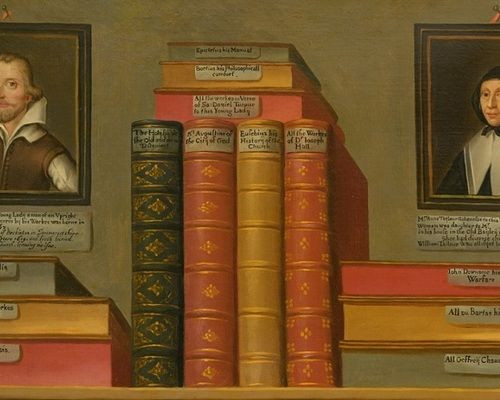
Two versions of the Great Picture were made, to hang in the Great Halls of Anne’s castles at Appleby and Skipton (the Skipton version was probably destroyed in the nineteenth century). The Picture takes the form of a triptych. On the left-hand panel, we see Anne at the age of fifteen, when she was disinherited. She is surrounded by the accomplishments of her girlhood and portraits of her childhood tutor, Samuel Daniel, and her governess Mrs Taylour. Books are found in every panel of the triptych, with their titles written out. They include the Bible, collections of sermons and exegetical works, Augustine’s City of God and the history of the church written by Eusebius. There are other works by classical writers and volumes of history and philosophy: Ovid, Boethius, Epictetus and Plutarch, for example. And there are novels, poems and romances: ‘all the works’ of Geoffrey Chaucer and Edmund Spenser, Castiglione’s Courtier, Sir Philip Sidney’s Arcadia. Anne was committed bibliophile, and the Great Picture is an emphatic statement of her great learning and intellectual interests.
The central panel shows her beloved mother, Lady Margaret, with her father, George Clifford, and portraits of Anne’s two brothers, who died in childhood at the ages of five and six. They are dressed in what look like ‘skirts’, because during this period, young boys did not start wearing trousers or breeches until the age of seven. The four portraits on the wall show Anne’s aunts, all set in much more elaborate frames than the two images of family servants on the left panel. Lady Margaret gestures to her two dead sons, and her other hand points towards her womb, indicating the presence of the foetal Anne in the picture. Although both Anne and her mother were staunch Protestants, there are strong echoes here of traditional religious images of the Annunciation, with Anne taking the place of Christ Incarnate. On the right-hand panel, Anne is shown in late middle age, now the triumphant lord over her ancestral estates. Portraits of her two husbands hang behind her. This sober, black-garbed depiction is the only image in the Great Picture that may have been painted ‘from life’.
"Music forms an essential part of her projection of social privilege and landed power"
Detail of music from the 'Great Picture'
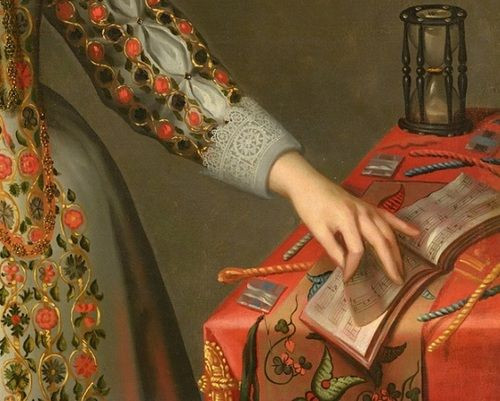
On the left-hand panel, the youthful Anne is turning the pages of a manuscript of musical notation. The scholar Lynn Hulse has suggested that the image was probably copied from a set of part-books for playing the viol. Yet while we see bars containing clefts and neumes, this is not a ‘real’ piece of music. Rather, it is an artistic impression of music, a visual representation of notes that cannot really be played.
A double-headed twelve-course lute stands against the table. Anne may well have been taught the lute as a child, either by the lutenist to the royal household, Thomas Cardell, or her tutor’s brother, John Daniel, a lutenist and composer who joined the household of the future Charles I in 1617. She also seems to have been taught to play the viol by the renowned composer and viol performer, John Jenkins. Yet while music was seen at the time as the ‘chiefest ornament’ of well-born women, the inclusion of the lute here probably has a symbolic meaning. Due to their distinctive shape, lutes were associated with female fertility and sexuality. And as representations of musical harmony, they were also associated with marriage. The nearly-sixty-year-old Anne is portraying her past self here as the ultimate eligible marital partner: educated and accomplished, well-read, skilled in music and embroidery, and the rightful heir to a great estate. Music forms an essential part of her projection of social privilege and landed power.
References
Lynn Hulse, ‘In Sweet Musicke Did Your Soule Delight’ in Karen Hearn and Lynn Hulse, ed. Lady Anne Clifford: Culture, Patronage and Gender in 17th Century Britain (Yorkshire Archaeological Society, 2009), pp. 87-97.